Client Care Continuum
Overview
Military-focused residential treatment helps veterans and active-duty service members address PTSD, substance use, and co-occurring mental health conditions. A three-to-one client-to-therapist ratio supports frequent individual therapy alongside group treatment. Care is provided by a multidisciplinary staff that often has military experience. Evidence-based therapies are combined with weekly treatment plan reviews, family involvement, and a gradual reduction in treatment hours intended to support progress while maintaining structure. Discharge planning can focus on returning to duty or building a sustainable life in the civilian sector. The facility accepts TRICARE, TriWest, and the VA Community Care Network, though a VA referral may be required.


Ages Served
- Seniors (Ages 65+)
- Adults (Ages 26-64)
- Young Adults (Ages 18-25)
Genders Accepted
- Female
- Male
Languages Served
- English
Treatment
- Long-term residential
- Short-term residential
Special Programs
- Service members
- Adult men
- Adult women
- Past trauma
- Pregnant/postpartum
- Veterans
- Seniors
- Young adults
Similar Facilities
Loading...
No results for your current selections
View all facilities-
 Freeman Recovery Center - Burns
Dickson, Tennessee
-
 The Sylvia Brafman Mental Health Center
Cumming, Georgia
-
 Mirror Lake Recovery Center
Burns, Tennessee
-
 Blue Ridge Mountain Recovery Center
Ball Ground, Georgia
-
 Oxford Treatment Center
Etta, Mississippi
-
 The Haven Detox West Memphis
West Memphis, Arkansas
-
 Samba Recovery Atlanta
Jonesboro, Georgia
-
 East Mississippi State Hospital - Substance Use Disorder Unit
Meridian, Mississippi
-
WestCare Georgia Guidance Center
Barnesville, Georgia
-
 Men and Women for Human Excellence
Decatur, Georgia
Military-informed trauma care
Care focuses on understanding military culture and how service-related trauma can affect daily living, relationships, and recovery. Treatment may include cognitive behavioral therapy (CBT), acceptance and commitment therapy (ACT), eye movement desensitization and reprocessing (EMDR), cognitive processing therapy (CPT), dialectical behavior therapy (DBT), and exposure therapy. Clients may work with counselors, social workers, nurses, psychologists, and psychiatric providers when appropriate.
Assessment and five stages of care
When beginning treatment, clients undergo an assessment guided by the American Society of Addiction Medicine (ASAM) criteria. This takes into account each client's needs, available support, and strengths and helps determine the appropriate level of care. After the assessment, clients work through five different stages of care that focus on understanding substance use and co-occurring mental health conditions. These include identifying personal strengths and values, working to change unhelpful thought patterns, finding purpose, strengthening their relationships, and preparing for sustainability after treatment. During their stay, clients take part in continued discussions with clinical, medical, and psychiatric providers to evaluate progress, identify setbacks, and adjust their treatment goals.
Staying connected within structured limits
Treatment may include maintaining connections to spouses, partners, children, extended family, friends, and military units through approved in-person or remote communication. The first 30 days of care have strict limits on communication. Clients cannot use cell phones, have visitors, or leave the property outside of approved activities such as gym visits or religious services. Upon completing this lockout period, clients may request family visits and use their cell phones during designated weekend hours. Clients may also use tablets for VA-designed apps, assessments, and treatment tracking, with Wi-Fi available at scheduled times.
A home-like lakeside setting
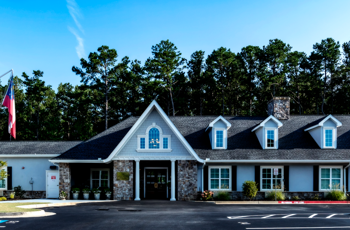
The facility’s campus includes several homes near a lake. This setting is intended to provide a space for clients to decompress during downtime and between treatment sessions. Clients may be allowed to bring personal items, including tablets, gaming systems, and musical instruments. The use of these items cannot interfere with treatment responsibilities.
Planning for continued care
Active-duty clients usually complete six to eight weeks of residential care. The facility communicates progress to the client's military unit. Additionally, an IOP plan is developed during the client's stay that is intended to help them transition smoothly. Residential stays for veterans may be longer and more flexible. Discharge planning for veterans may include IOP, individual therapy, housing, employment, identifying support systems, and barriers that may affect continued recovery.
Facility transparency
- Verified by Start Your Recovery: On September 14, 2026, our research team conducted a comprehensive review of this facility's advertising claims, registrations from public health departments, national accrediting bodies, and SAMHSA.
Cost and Insurance
Insurance Accepted


Disclaimer: Additional insurance plans may be accepted. Please contact the provider directly to confirm current coverage details, as this information may change.
Financial Assistance
- Does not offer Free
- Does not offer Payment assistance
- Does not offer Sliding fee scale
Nearby Facilities
Loading...
No results for your current selections
View all facilities-
 Bradford Health Services - Warrior
Warrior, Alabama
-
Aletheia House - Mothers Hope Residential
Birmingham, Alabama
-
 Aletheia House - Birmingham Men and Womens Residential
Birmingham, Alabama
-
Lighthouse of Cullman, Inc
Cullman, Alabama
-
Northwest Alabama Mental Health Ctr - Start Program
Fayette, Alabama
-
The Salvation Army Adult Rehabilitation Center - Birmingham
Birmingham, Alabama
-
 Fellowship House Inc
Birmingham, Alabama
Treatment
Treatment Setting
- Long-term residential
- Short-term residential
Treatment Approaches
- Cognitive behavioral therapy (CBT)
- Motivational interviewing
- Relapse prevention support
- Substance use counseling
- Trauma-focused counseling
Additional Support and Services
- Case management support
- Help with transportation
- Integrated health care
- Mental health support
- Social skills training
- Suicide prevention support
Counseling and Education
- Couples counseling
- Family therapy
- General health education services
- Group therapy
- One-on-one counseling
- Substance use education
Transition Support
- Discharge and next steps planning
- Ongoing recovery care
Testing & Pre-Treatment
- Comprehensive health checkup
- Mental health assessment
- Mental health screening
- Substance use assessment
- Substance use screening
Amenities and Experiences
Amenities
- Fitness center
- Access to nature
- Gardens
- Outdoor relaxation lounge
Room Amenities
- Private rooms
- TV
Activities
- Art therapy
- Games
- Yoga
- Culinary workshops
- Fitness activities
- Kayaking
- Spiritual or faith-based services
Settings
- Lakeside
Policies
- Allows internet access
- Smoking allowed in designated areas
Ownership Type
- Non-profit
Quality and Trust
Commission on Accreditation of Rehabilitation Facilities
CARF reviews rehab programs to make sure they provide respectful, effective, and personalized care. For addiction treatment, CARF uses standards developed with the American Society of Addiction Medicine (ASAM), so this accreditation shows the program follows trusted, evidence-based guidelines for treating substance use.
Learn morePopular Destinations
Loading...
-
 The Recovery Team - Delray Beach
Delray Beach, FL
-
 The Haven Detox Florida
West Palm Beach, FL
-
 Boca Recovery Center
Pompano Beach, FL
-
Blue Ridge Mountain Recovery Center
Ball Ground, GA
-
Mirror Lake Recovery Center
Burns, TN
Loading...
No results for your current selections
View all facilities in CaliforniaLoading...
No results for your current selections
View all facilities in ArizonaLoading...
No results for your current selections
View all facilities in FloridaHow we research treatment facilities
Across the site, our team has conducted over 1,000 pre-admissions calls to better understand the patient experience, interviewed facility clinical leaders, performed facility background checks, and compared our information against trusted public data sources.
Our research process begins with data from the Substance Abuse and Mental Health Services Administration (SAMHSA), accrediting bodies including The Joint Commission and CARF, government licensing agencies, and other trusted sources. From there, our team conducts significant original research, including:
- Pre-admissions calls: We speak with admissions staff to get a candid picture of patient experience.
- Background checks: We review complaints from past clients, media reports, actions taken by accrediting bodies, and positive recognition from notable organizations.
- Clinical interviews: We have in-depth conversations with clinical leadership, often lasting up to one hour, that give us a better understanding of clinical care.
- Data partnerships: We ingest and analyze exclusive data that provides information about in-network insurance status, cost, and more.
Research varies by facility. Each facility profile shows which research steps we completed and when each step was last performed. Learn more about our research process and background checks.
How we evaluate treatment facilities
These data help us develop a Trust Score for each facility—a simple letter grade that helps you assess how much confidence to place in a facility based on the information available to us. Trust Score considers accreditation, operating history, notable recognition, and concerns identified during our background check. Our Trust Score is an objective rating that is never influenced by advertiser payment. Learn more about our Trust Score methodology.
Important disclaimer
We cannot guarantee the quality of treatment at any facility. We cannot independently confirm the accuracy of every data point, and some information may become outdated or change over time. A Trust Score is a starting point, not a guarantee of treatment quality or outcomes. Please contact us if you would like to update or correct facility information.