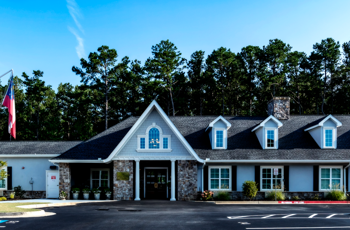
The Recovery Village South Atlanta Drug, Alcohol and Mental Health Rehab
Overview
Medical withdrawal (detox) with 24-hour supervision and residential treatment for substance use and co-occurring mental health concerns offers a full range of care, including a partial hospitalization program (PHP), an intensive outpatient program (IOP), aftercare planning, and referrals. Daily routines may include individual and group therapy, mindfulness, meditation, and recovery skill building. Aftercare planning may include relapse prevention, referrals, and help coordinating the next level of care. This facility accepts private insurance and self-pay.


Ages Served
- Seniors (Ages 65+)
- Adults (Ages 26-64)
- Young Adults (Ages 18-25)
Genders Accepted
- Female
- Male
Languages Served
- English
Treatment
- Intensive outpatient treatment (IOP)
- Long-term residential
- Outpatient day treatment or partial hospitalization
- Regular outpatient treatment
- Residential detoxification
- Short-term residential
Special Programs
- Adult men
- Adult women
- Past trauma
- Seniors
- Young adults
Similar Facilities
Loading...
No results for your current selections
View all facilities-
 Lantana Recovery Greenville
Greenville, South Carolina
-
 The Sylvia Brafman Mental Health Center
Cumming, Georgia
-
 Blue Ridge Mountain Recovery Center
Ball Ground, Georgia
-
 Lantana Recovery Columbia
Columbia, South Carolina
-
 Samba Recovery Atlanta
Jonesboro, Georgia
-
 Unison Behavioral Health - Garden Gate
Waycross, Georgia
-
 Restoration House Ministries - Newport Campus
Newport, Tennessee
-
Braswell House
Swainsboro, Georgia
-
MARR Right Side Up - DeKalb and Fulton Centers
Atlanta, Georgia
-
WestCare Georgia - Youth Academy
Carrollton, Georgia
Who is this facility a good fit for?
- Best fit if: Adults who want medical detox followed directly by residential treatment; care that addresses substance use alongside co-occurring mental health concerns; a structured daily schedule; a facility that can provide a step-down pathway after residential treatment; family visits available once medically stable; and recreational and wellness options alongside treatment.
- Not a fit if: Adults who want access to supportive housing; want to keep a personal device throughout residential treatment; and want visitation during detox.
What to expect
Developing your care plan
- Pre-admission screening: Prior to admission, staff gather information about substance use, mental health, medical history, living situation, family history of addiction, and insurance to determine whether the program is the right fit. In the event another setting better meets the needs of the client, staff may help connect them to other treatment or medical options.
- Assessment and care planning: Upon arrival, clients undergo an in-depth assessment that may include substance use screening, physical exams, and evaluations of mental health and safety risks. These findings guide the development of an individualized care plan. Changes to the plan during treatment are informed by the client's needs and progress in recovery.
Who you will meet with
- Therapists and medical providers: Clients meet with therapists who have master's degrees or higher. They provide one-on-one and group counseling. Doctors and psychiatrists support clients with medical and mental health needs during care.
- Daily support and coordination: Behavioral health technicians are on staff to provide daily support and interaction. Case managers help coordinate family visits and transitions to the next level of care.
Typical schedule
- Withdrawal management: Medical detox includes 24/7 medical supervision. Medications for addiction treatment (MAT) may also be available when determined to be clinically appropriate. During this stage of treatment, the daily routine is less structured while the client stabilizes, and the length of stay depends on the client's needs.
- Residential treatment: Residential care usually lasts 30–45 days, though each client may have a different length of stay. Care focuses on underlying mental health concerns, triggers, recovery skills development, and behaviors. The routine becomes more structured as clients become medically stable.
- Daily routine: Clients take part in therapies and activities that were selected for their personalized care plan. These may include individual and group therapy, mindfulness, meditation, skill-building groups, and wellness activities. Breakfast, lunch, and dinner also take place throughout the day.
Living experiences and amenities
- Rooms, meals, and recreation: Clients stay with one other resident in shared rooms with an in-room bathroom. Meals are prepared by a chef, and vegan and vegetarian options are available. Facility amenities may include a basketball court, gym, walking trails, yoga, recreation spaces, ping pong, and games.
- Family visits and phone access: During residential care, weekend visits are available but must be arranged in advance through an assigned case manager. Visits from loved ones are not available during medical detox. A landline is accessible to clients for calls. Cellphones are secured at the nurses' station and cannot be used during treatment.
Aftercare
- Step-down care: Case managers on staff may help clients coordinate transitions to continued treatment. This may include PHP or IOP programs based on the client's needs.
- Recovery planning: Continued care planning may include relapse prevention, referrals, support groups, and other resources to support continued recovery. Clients in need of supportive housing may need to arrange it separately, as the facility does not provide supportive housing accommodations.
Pre-admissions experience
We conducted a series of pre-admissions calls, the most recent on October 5, 2026, to evaluate response time, transparency, and patient experience.
When we contacted The Recovery Village South Atlanta, they answered right away and were calm, reassuring, and easy to talk to. They explained treatment, daily life, and visitation without pressure and shared self-pay rates without requiring an insurance check first.
Client reviews
Reviews of Recovery Village South Atlanta frequently highlight recovery tools, therapy, and caring staff, with several clients describing meaningful progress in substance use and mental health treatment. Feedback about administrative processes is more critical, including recurring concerns about insurance or billing practices and follow-up with records and paperwork.
- Treatment quality & outcomes (90% positive): Many reviewers say treatment helped them build coping skills, address substance use and mental health concerns, and feel better prepared for recovery. A smaller number felt their treatment needs were not adequately addressed. “It also helped me gain a new understanding on how to deal with my grief issues.”
- Staff & care experience (75% positive): Nurses, behavioral health technicians, therapists, counselors, and case managers receive frequent praise for being caring, knowledgeable, and helpful. Several reviews describe less positive interactions with leadership or concerns about how problems were handled. “The staff were so nice to me.”
- Access & process: Reviewers describe problems involving medical records, paperwork, callbacks, medication coordination, and leaving or returning to treatment.
- Facility & environment (70% positive): Several reviewers describe the facility as clean, attractive, or pleasant. Other reviews raise concerns about rules and the atmosphere. “Beautiful facility with a wonderful staff.”
How we researched this facility
- Reviewed by: Jenn Farr, content writer and strategist, reviewed the research findings and wrote this facility profile on October 7, 2026.
- Facility data research: On October 7, 2026, our research team reviewed the facility’s website and information from public health departments, national accrediting organizations, and SAMHSA to verify facility details.
- Pre-admissions call: On October 5, 2026, our content team called the facility to evaluate responsiveness, transparency, and the prospective patient experience.
Cost and Insurance
Insurance Accepted
-

-

-

-

-

-

-

-

-

-

- Other Private Insurance

Disclaimer: Additional insurance plans may be accepted. Please contact the provider directly to confirm current coverage details, as this information may change.
Financial Assistance
- Does not offer Free
- Does not offer Payment assistance
- Does not offer Sliding fee scale
Nearby Facilities
Loading...
No results for your current selections
View all facilities-
The Sylvia Brafman Mental Health Center
Cumming, Georgia
-
Samba Recovery Atlanta
Jonesboro, Georgia
-
WestCare Georgia Guidance Center
Barnesville, Georgia
-
MARR Right Side Up - DeKalb and Fulton Centers
Atlanta, Georgia
-
Men and Women for Human Excellence
Decatur, Georgia
-
WestCare Georgia - Youth Academy
Carrollton, Georgia
-
Mary Hall Freedom Village Inc
Sandy Springs, Georgia
-
 Riverwoods Behavioral Health
Riverdale, Georgia
-
 MARR - Mens Recovery Center
Atlanta, Georgia

Treatment
Treatment Setting
- Intensive outpatient treatment (IOP)
- Long-term residential
- Outpatient day treatment or partial hospitalization
- Regular outpatient treatment
- Residential detoxification
- Short-term residential
Treatment Approaches
- 12-step program support
- Cognitive behavioral therapy (CBT)
- Motivational interviewing
- Relapse prevention support
- Substance use counseling
- Trauma-focused counseling
Counseling and Education
- Family therapy
- General health education services
- Group therapy
- One-on-one counseling
Transition Support
- Discharge and next steps planning
- Ongoing recovery care
Testing & Pre-Treatment
- Comprehensive health checkup
- Mental health assessment
- Mental health screening
- Substance use assessment
- Substance use screening
Medication-Based Treatments
- Acamprosate (Campral)
- Buprenorphine with naloxone
- Disulfiram
- Medication for mental disorders
- Naltrexone (extended-release, injectable)
- Naltrexone (oral)
Amenities and Experiences
Room Amenities
- Air conditioned rooms
- Personal storage/safe
- Shared room options
Policies
- Smoking allowed in designated areas
Ownership Type
- For-profit
Quality and Trust
The Joint Commission
The Joint Commission is one of the most trusted names in healthcare. If a rehab center has this accreditation, it means they meet strong national standards for safety, treatment quality, and staff training.
Learn morePopular Destinations
Loading...
-
Blue Ridge Mountain Recovery Center
Ball Ground, GA
-
The Sylvia Brafman Mental Health Center
Cumming, GA
-
 The Recovery Team - Delray Beach
Delray Beach, FL
-
 BriteLife Recovery at Hilton Head
Hilton Head Island, SC
-
 Boca Recovery Center
Pompano Beach, FL
-
 The Haven Detox - Florida
West Palm Beach, FL
-
Samba Recovery Atlanta
Jonesboro, GA
-
 Wilmington Treatment Center
Wilmington, NC
-
 Mirror Lake Recovery Center
Burns, TN
Loading...
No results for your current selections
View all facilities in CaliforniaLoading...
No results for your current selections
View all facilities in ArizonaLoading...
No results for your current selections
View all facilities in FloridaHow we research treatment facilities
Across the site, our team has conducted over 1,000 pre-admissions calls to better understand the patient experience, interviewed facility clinical leaders, performed facility background checks, and compared our information against trusted public data sources.
Our research process begins with data from the Substance Abuse and Mental Health Services Administration (SAMHSA), accrediting bodies including The Joint Commission and CARF, government licensing agencies, and other trusted sources. From there, our team conducts significant original research, including:
- Pre-admissions calls: We speak with admissions staff to get a candid picture of patient experience.
- Background checks: We review complaints from past clients, media reports, actions taken by accrediting bodies, and positive recognition from notable organizations.
- Clinical interviews: We have in-depth conversations with clinical leadership, often lasting up to one hour, that give us a better understanding of clinical care.
- Data partnerships: We ingest and analyze exclusive data that provides information about in-network insurance status, cost, and more.
Research varies by facility. Each facility profile shows which research steps we completed and when each step was last performed. Learn more about our research process and background checks.
How we evaluate treatment facilities
These data help us develop a Trust Score for each facility—a simple letter grade that helps you assess how much confidence to place in a facility based on the information available to us. Trust Score considers accreditation, operating history, notable recognition, and concerns identified during our background check. Our Trust Score is an objective rating that is never influenced by advertiser payment. Learn more about our Trust Score methodology.
Important disclaimer
We cannot guarantee the quality of treatment at any facility. We cannot independently confirm the accuracy of every data point, and some information may become outdated or change over time. A Trust Score is a starting point, not a guarantee of treatment quality or outcomes. Please contact us if you would like to update or correct facility information.