Harris House Foundation
Overview
Residential addiction treatment with clinical care and practical support to help clients prepare for life after treatment. The facility offers a 28-day inpatient program and medical withdrawal management (detox). Step-down care is also available, including a partial hospitalization program (PHP), an intensive outpatient program (IOP), and a standard outpatient treatment option. Transitional housing is also available for up to a year, with group and individual therapy, employment assistance, and workforce-reentry classes. Family support and weekly aftercare groups also extend recovery support. In-network with most health insurance providers.


Ages Served
- Adults (Ages 26-64)
- Young Adults (Ages 18-25)
Genders Accepted
- Female
- Male
Languages Served
- English
Treatment
- Hospital inpatient detoxification
- Hospital inpatient treatment
- Intensive outpatient treatment (IOP)
- Long-term residential
- Outpatient day treatment or partial hospitalization
- Regular outpatient treatment
- Residential detoxification
- Short-term residential
Special Programs
- Adult men
- Adult women
- Military families
- Past domestic violence
- Past sexual abuse
- Past trauma
- Mental health disorders
- HIV/AIDS
- Pregnant/postpartum
- Veterans
- Pain management
- Seniors
- Young adults
Similar Facilities
Loading...
No results for your current selections
View all facilities-
 Lincoln Recovery
Raymond, Illinois
-
 Neartown Recovery - Men's Treatment
Kirksey, Kentucky
-
 McCallum Place
St. Louis, Missouri
-
 Boulware Mission Inc - Addiction Services
Owensboro, Kentucky
-
 Compass Health
Linn Creek, Missouri
-
 Compass Health - Outpatient
Clinton, Missouri
-
 Brightli - Preferred Family Healthcare Inc
Springfield, Missouri
-
 Abbey LLC
Bettendorf, Iowa
-
First Step Mobile Evaluations LLC - Mobile Services and Telehealth
Burlington, Iowa
-
 Vision House of Cape Girardeau
Cape Girardeau, Missouri
Who is this facility a good fit for?
- Best fit if: Adults seeking residential treatment for alcohol or drug use with or without co-occurring mental health conditions; needing medical withdrawal management; wanting continued support after inpatient treatment; working toward financial stability; needing treatment that accommodates everyday responsibilities; families who want to be involved in treatment.
- Not a fit if: Adults seeking a luxury facility; requiring private bedrooms; preferring individual therapy to group therapy; wanting a population-specific program.
What to expect
Developing your care plan
- Individualized treatment planning: The admissions team determines the appropriate level of care for each client. Family members and significant others are encouraged to participate in the assessment and treatment process.
- Establishing treatment goals: Counselors develop individualized treatment plans that focus on specific recovery goals and time-based, active steps to help clients meet those goals.
Who you will meet with
- Inpatient treatment: Clients in inpatient treatment meet with a psychiatrist, counselors, and nursing staff available 24/7.
- PHP and IOP: In the outpatient programs, social workers, professional counselors, and alcohol and drug counselors lead individual and group therapy and educational programming.
Typical schedule
- Withdrawal management: Withdrawal management is a short-term service that focuses on medical stabilization and symptom management. Clients receive supportive care during the day as they prepare for the next phase of treatment.
- Intensive inpatient treatment: Clients in the 28-day residential treatment program attend about 35 hours of treatment every week. This generally consists of 2 group sessions in the morning and 3 in the afternoon and evening, featuring a combination of education and process groups. Clients get 3 chef-prepared meals every day. They also attend weekly individual counseling sessions and have a lighter schedule on Sundays.
- Partial hospitalization program: In the PHP, clients attend sessions 5 days a week for 6 hours a day. Clients participate in educational and process-oriented groups and have weekly individual counseling sessions. Optional family and friend educational groups are also offered twice a week.
- Intensive outpatient treatment: Clients have the option of attending sessions in person or virtually from 9 a.m. to noon or from 6 to 9 p.m. Programming combines individual and group sessions, and clients are encouraged to participate in on-site Alcoholics Anonymous (AA) and Narcotics Anonymous (NA) meetings. Family programming is also offered for an hour once a week.
Living experiences and amenities
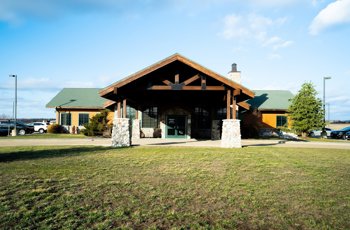
- Modern treatment center in a natural environment: The facility offers views of the Missouri River with access to walking paths and outdoor seating and relaxation spaces.
- Indoor spaces: Clients share an indoor lounge with sofas and a TV and have access to a kitchenette. In inpatient treatment, clients get 3 chef-prepared meals a day.
- Electronics and visitation: Residential clients and those in transitional living are permitted to have cell phones, laptops, and tablets. Visitation for the residential program is permitted on Sundays from 2 to 4 p.m.
- Family involvement: Family members and significant others are invited to participate in the assessment and treatment process and can be involved in individual and group counseling. Online family groups are offered twice a week: Wednesday from 6 to 7:30 p.m. and Saturday from 10 to 11:30 a.m.
Aftercare
- Transitional housing: Harris House offers transitional housing for up to a year that includes various types of practical support. Clients can get support re-entering the workplace and attending ongoing therapy. The transitional living location is along a bus line, which can make it easier for clients without reliable transportation to access work and other responsibilities.
- Built-in step-down options: Clients in the residential program can step down to the PHP, IOP, and standard outpatient programming within the same facility.
- Groups and alumni support: After inpatient treatment, clients can attend weekly aftercare groups for up to a year. Lifetime resources and community events are also offered for alumni.
Pre-admissions experience
We conducted a series of pre-admissions calls, the most recent on October 9, 2026, to evaluate response time, transparency, and patient experience.
We contacted Harris House and found the representative to be grounded, honest, and helpful. They provided detailed information about treatment hours, daily schedules, and aftercare and were transparent about the exact out-of-pocket cost and accepted payment methods.
Client reviews
Harris House Treatment and Recovery Center receives frequent praise for its compassionate staff, structured treatment, and strong recovery community. However, some reviewers raise concerns about medication management, admission decisions, and consistency in the treatment experience.
- Staff & care experience (90% positive): Many reviewers describe staff and counselors as caring, respectful, and approachable, noting that they feel treated as individuals rather than numbers. A few reviewers, however, report negative interactions with staff and management. "They treat you like a person, not just a dollar sign."
- Treatment quality & outcomes (85% positive): Reviewers frequently highlight educational classes, counseling, and structured recovery programming. Some raise concerns about opioid withdrawal management, medication decisions, and the relevance of certain classes. "The classes were the best part, so informative."
- Support & community (90% positive): Clients often describe developing meaningful connections with peers and maintaining relationships after treatment. Reviewers also mention sober living, alumni involvement, and ongoing recovery support. Some note that follow-up after discharge could be more consistent. "Our group had a real family connection."
- Facility & environment (85% positive): Reviewers commonly appreciate the comfortable accommodations, cleanliness, and meals. However, some describe concerns about facility safety, including reports of substances being brought onto the property and inconsistent monitoring. "The food was very good and the staff in the kitchen were great."
- Access & process: Some reviewers describe a helpful admissions experience, while others report difficulty securing admission or concerns about financial requirements and treatment coverage. These experiences suggest that access and admission expectations may vary.
How we researched this facility
- Reviewed by: Jennifer Trimbee, registered nurse, content writer and strategist, reviewed the research findings and wrote this facility profile on October 30, 2026.
- Facility data research: On September 20, 2026, our research team reviewed the facility’s website and information from public health departments, national accrediting organizations, and SAMHSA to verify facility details.
- Pre-admissions call: On October 9, 2026, our content team called the facility to evaluate responsiveness, transparency, and the prospective patient experience.
Cost and Insurance
Insurance Accepted
-

-

-

-
-

-

-

-

-

- Other Private Insurance


Disclaimer: Additional insurance plans may be accepted. Please contact the provider directly to confirm current coverage details, as this information may change.
Financial Assistance
- Does not offer Free
- Does not offer Payment assistance
- Does not offer Sliding fee scale
Nearby Facilities
Loading...
No results for your current selections
View all facilities-
McCallum Place
St. Louis, Missouri
-
Illinois Recovery Center LLC
Belleville, Illinois
-
 Sana Lake Recovery
Dittmer, Missouri
-
The Salvation Army Adult Rehabilitation Center - St. Louis
St. Louis, Missouri
-
Brightli - Preferred Family Healthcare Inc
Saint Louis, Missouri
-
Brightli - Preferred Family Healthcare Adolescent
Saint Charles, Missouri
-
Chestnut Health Systems Inc
Maryville, Illinois
-
 Comprehensive Behavior Health Center - Saint Clair County Inc
East Saint Louis, Illinois
-
 Illinois Recovery Center LLC
Belleville, Illinois
Treatment
Treatment Setting
- Hospital inpatient detoxification
- Hospital inpatient treatment
- Intensive outpatient treatment (IOP)
- Long-term residential
- Outpatient day treatment or partial hospitalization
- Regular outpatient treatment
- Residential detoxification
- Short-term residential
Treatment Approaches
- 12-step program support
- Brief intervention
- Cognitive behavioral therapy (CBT)
- Incentive-based therapy
- Motivational interviewing
- Relapse prevention support
- Substance use counseling
- Trauma-focused counseling
Additional Support and Services
- Case management support
- Mental health support
Counseling and Education
- Family therapy
- Group therapy
- One-on-one counseling
- Substance use education
- Tobacco and vaping cessation counseling
Transition Support
- Discharge and next steps planning
- Ongoing recovery care
- Overdose prevention and naloxone education
- Post-discharge follow-up
Testing & Pre-Treatment
- Breathalyzer testing for alcohol
- Community outreach and support
- Comprehensive health checkup
- Oral fluid testing for drugs or alcohol
- Substance use assessment
- Tobacco use assessment
- Urine testing for drugs or alcohol
- Substance use screening
Amenities and Experiences
Amenities
- Access to nature
- Airport pickup & drop-off
- Outdoor relaxation lounge
- Relaxation lounge
- Walking paths
Room Amenities
- Desk
- Kitchenette
- Outdoor space
- Private rooms
- Sofa
- TV
- Shared room options
Activities
- Job training
- Life skills workshops
- Spiritual or faith-based services
Policies
- Smoking allowed in designated areas
- Vaping allowed in designated areas
Ownership Type
- Non-profit
Quality and Trust
Trust Score
A simple A–E grade that offers a quick view of how much confidence you might place in a facility. It’s not a guarantee of quality or outcomes, but a data-informed tool to help guide your search. More on our methodology.

Commission on Accreditation of Rehabilitation Facilities
CARF reviews rehab programs to make sure they provide respectful, effective, and personalized care. For addiction treatment, CARF uses standards developed with the American Society of Addiction Medicine (ASAM), so this accreditation shows the program follows trusted, evidence-based guidelines for treating substance use.
Learn morePopular Destinations
Loading...
-
 Grand Falls Center For Recovery
Joplin, MO
-
Sana Lake Recovery
Dittmer, MO
-
McCallum Place
St. Louis, MO
-
Lincoln Recovery
Raymond, IL
-
 The Haven Detox Little Rock
Little Rock, AR
-
 The Haven Detox West Memphis
West Memphis, AR
-
 Boca Recovery Center
Bloomington, IN
-
 Mountain Springs Recovery
Monument, CO
-
 The Haven Detox Oklahoma
Tulsa, OK
-
 Boca Recovery Center
Pompano Beach, FL
Loading...
No results for your current selections
View all facilities in CaliforniaLoading...
No results for your current selections
View all facilities in ArizonaLoading...
No results for your current selections
View all facilities in FloridaHow we research treatment facilities
Across the site, our team has conducted over 1,000 pre-admissions calls to better understand the patient experience, interviewed facility clinical leaders, performed facility background checks, and compared our information against trusted public data sources.
Our research process begins with data from the Substance Abuse and Mental Health Services Administration (SAMHSA), accrediting bodies including The Joint Commission and CARF, government licensing agencies, and other trusted sources. From there, our team conducts significant original research, including:
- Pre-admissions calls: We speak with admissions staff to get a candid picture of patient experience.
- Background checks: We review complaints from past clients, media reports, actions taken by accrediting bodies, and positive recognition from notable organizations.
- Clinical interviews: We have in-depth conversations with clinical leadership, often lasting up to one hour, that give us a better understanding of clinical care.
- Data partnerships: We ingest and analyze exclusive data that provides information about in-network insurance status, cost, and more.
Research varies by facility. Each facility profile shows which research steps we completed and when each step was last performed. Learn more about our research process and background checks.
How we evaluate treatment facilities
These data help us develop a Trust Score for each facility—a simple letter grade that helps you assess how much confidence to place in a facility based on the information available to us. Trust Score considers accreditation, operating history, notable recognition, and concerns identified during our background check. Our Trust Score is an objective rating that is never influenced by advertiser payment. Learn more about our Trust Score methodology.
Important disclaimer
We cannot guarantee the quality of treatment at any facility. We cannot independently confirm the accuracy of every data point, and some information may become outdated or change over time. A Trust Score is a starting point, not a guarantee of treatment quality or outcomes. Please contact us if you would like to update or correct facility information.